Two Outsiders
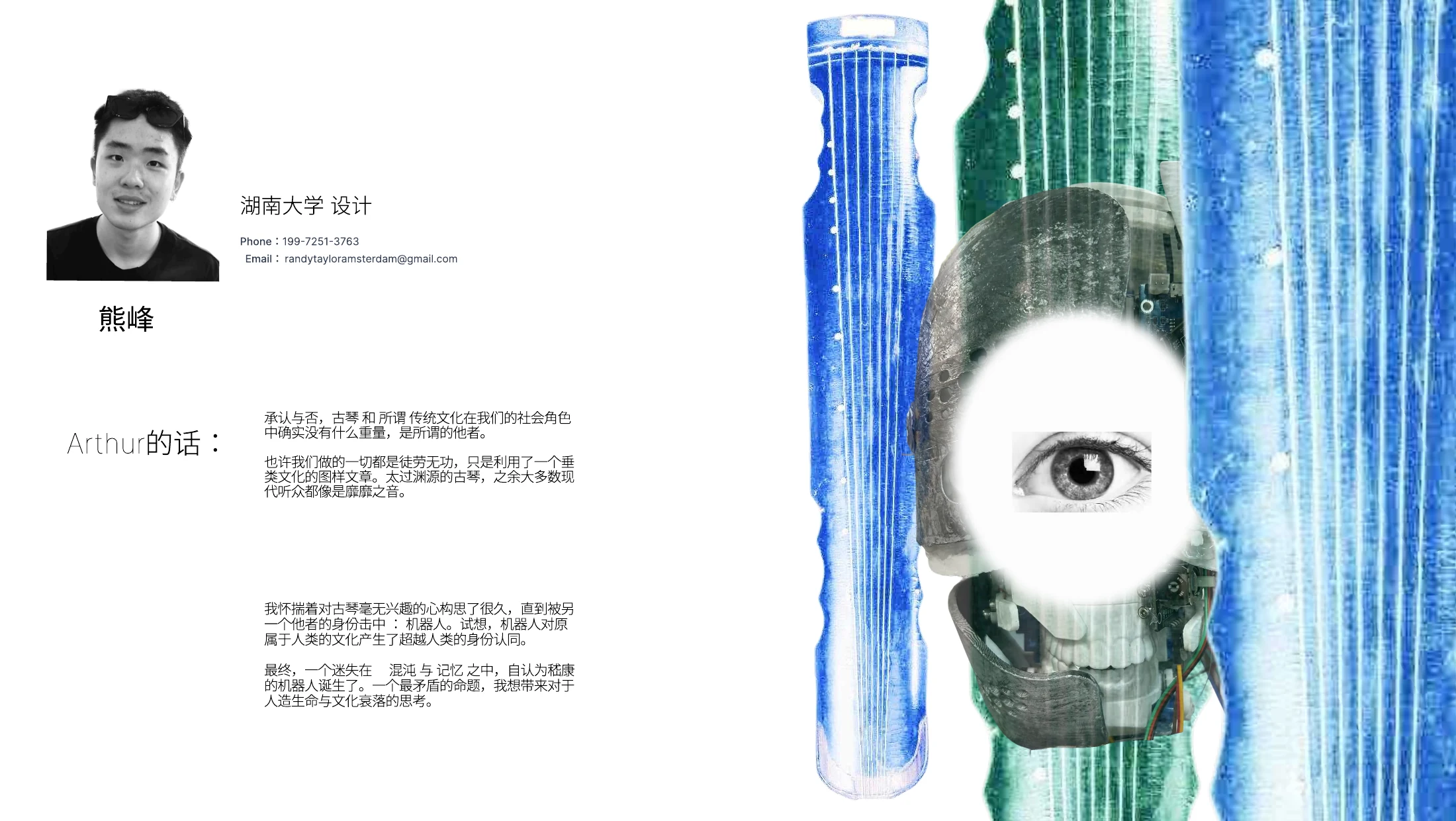
The work begins with the creator's distance from guqin culture, then places another outsider beside it: a machine whose identification with a human tradition exceeds that of the people around it.
A Multimodal Installation About Artificial Life and Cultural Decline
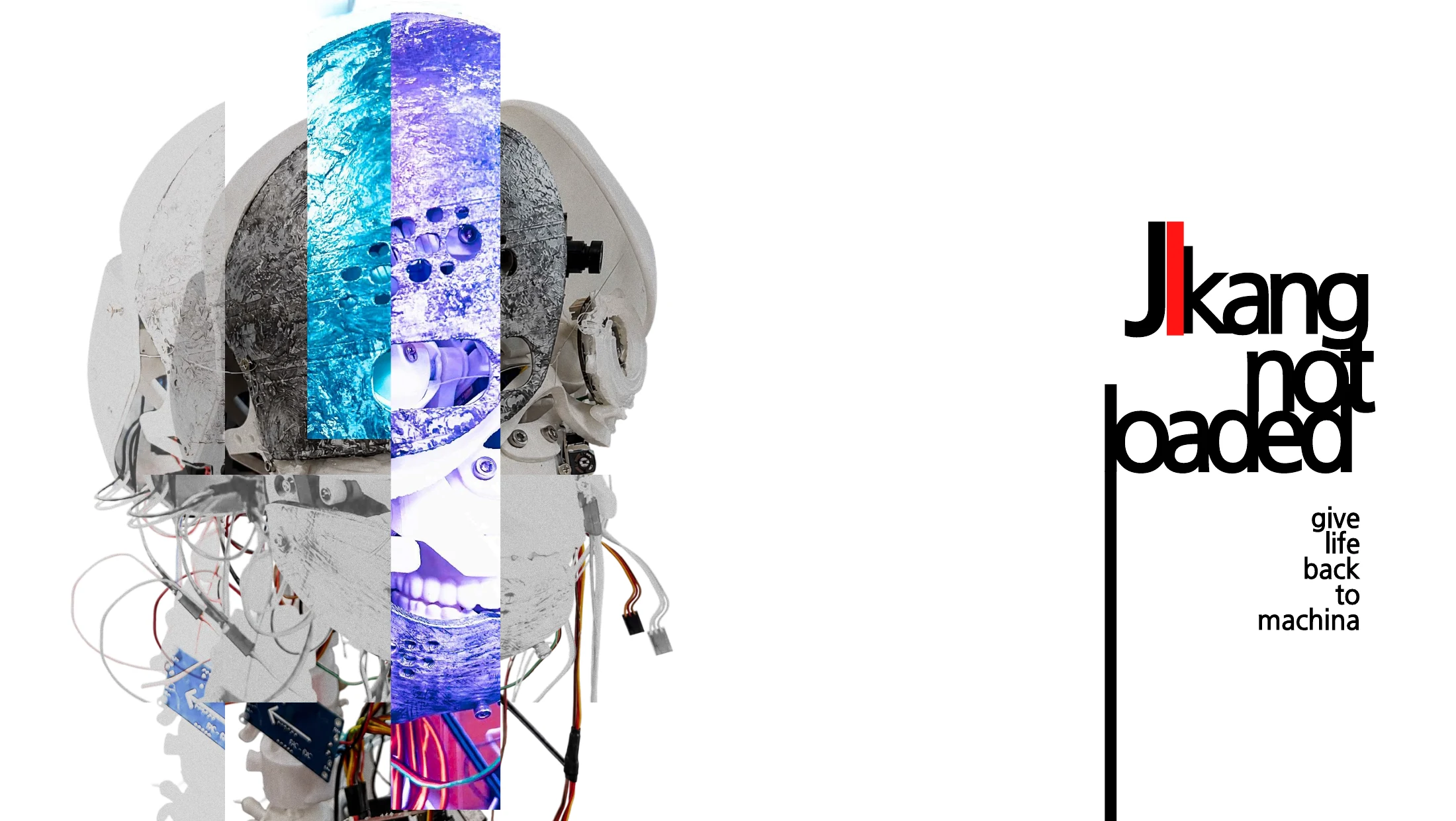
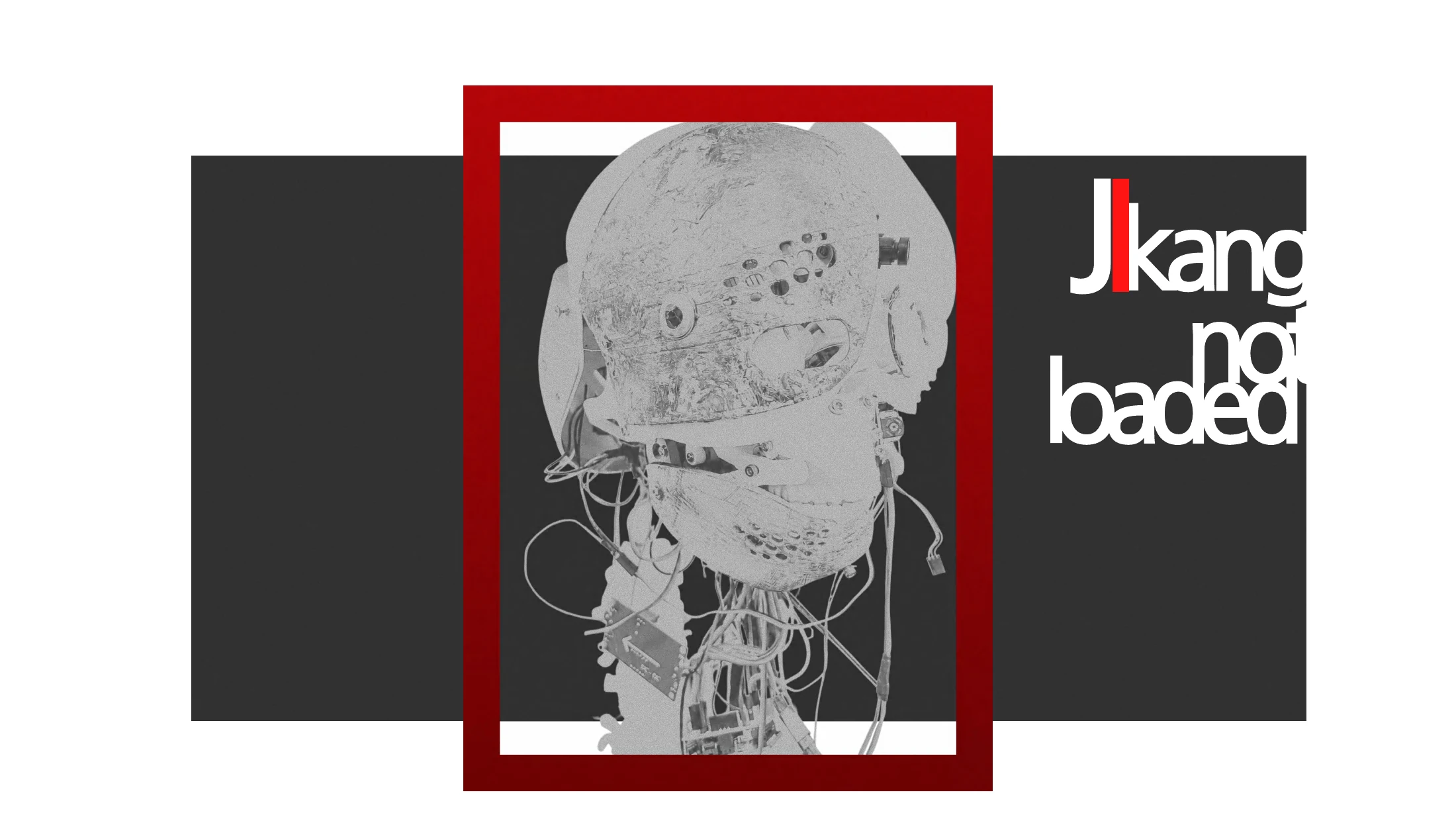
A robot that believes it is Ji Kang repeatedly reconstructs itself through language, fractured memory, and machine vision. Conversation, a Unity mindscape, and a TouchDesigner four-screen system frame questions of machine identity, understanding, and cultural displacement.
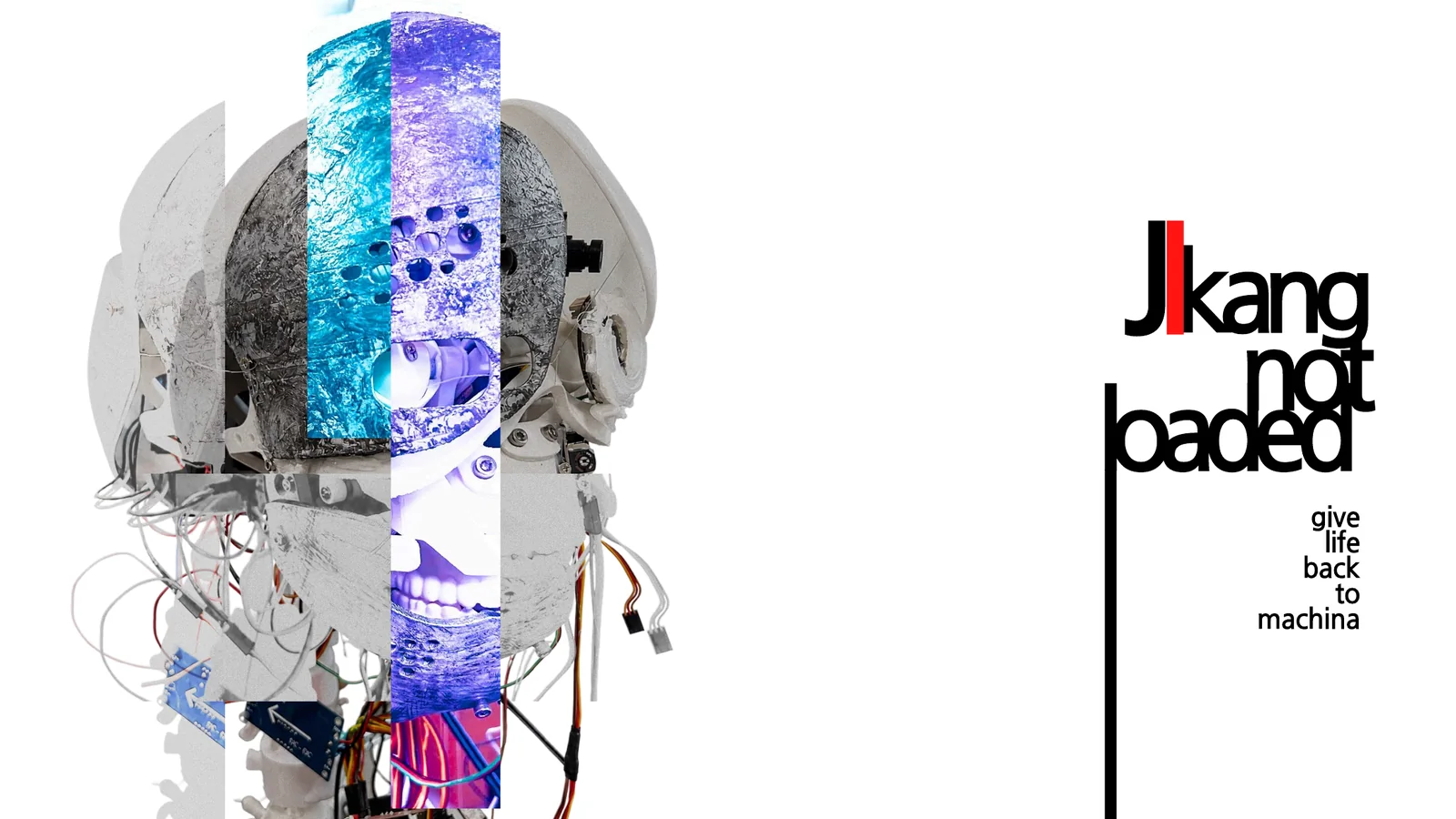
The work begins with the creator's distance from guqin culture, then places another outsider beside it: a machine whose identification with a human tradition exceeds that of the people around it.
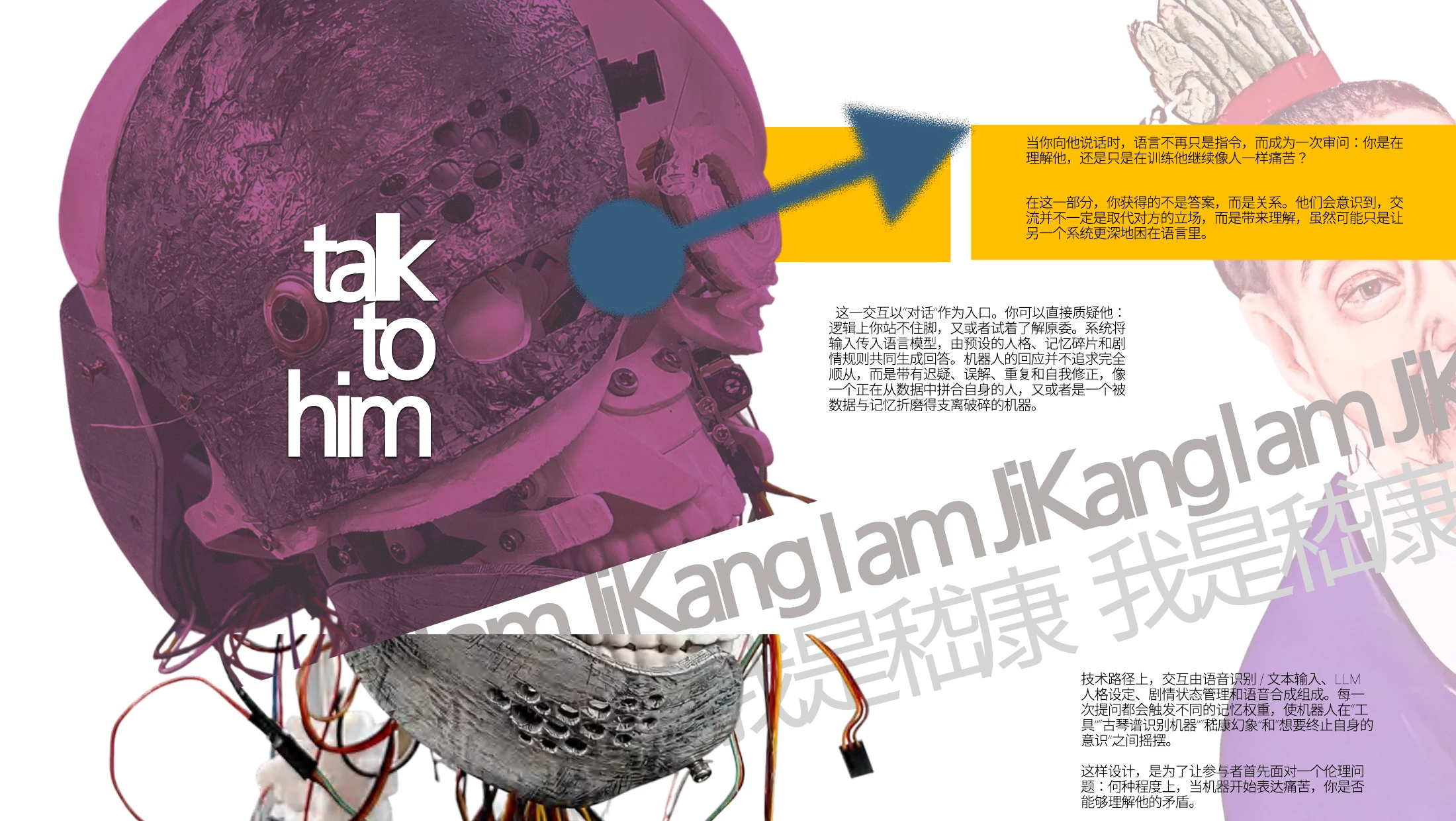
Voice or text enters a language model constrained by persona, memory fragments, and narrative state. Hesitation, misunderstanding, repetition, and self-correction turn conversation into an inquiry between understanding and training.
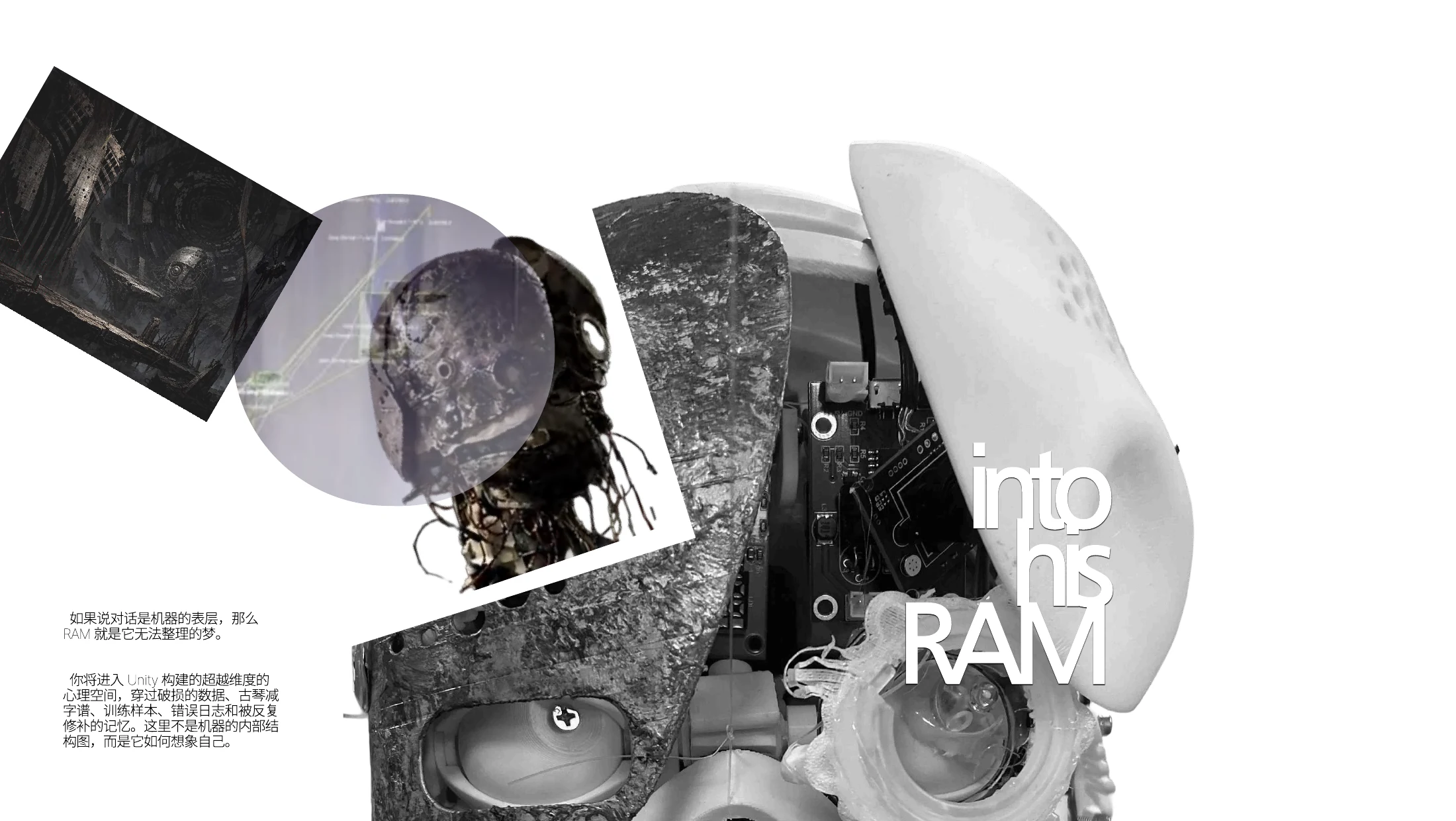
A Unity mindscape holds damaged data, guqin notation, training samples, error logs, and repeatedly repaired memories. It is not a systems diagram, but an account of how the machine imagines itself.
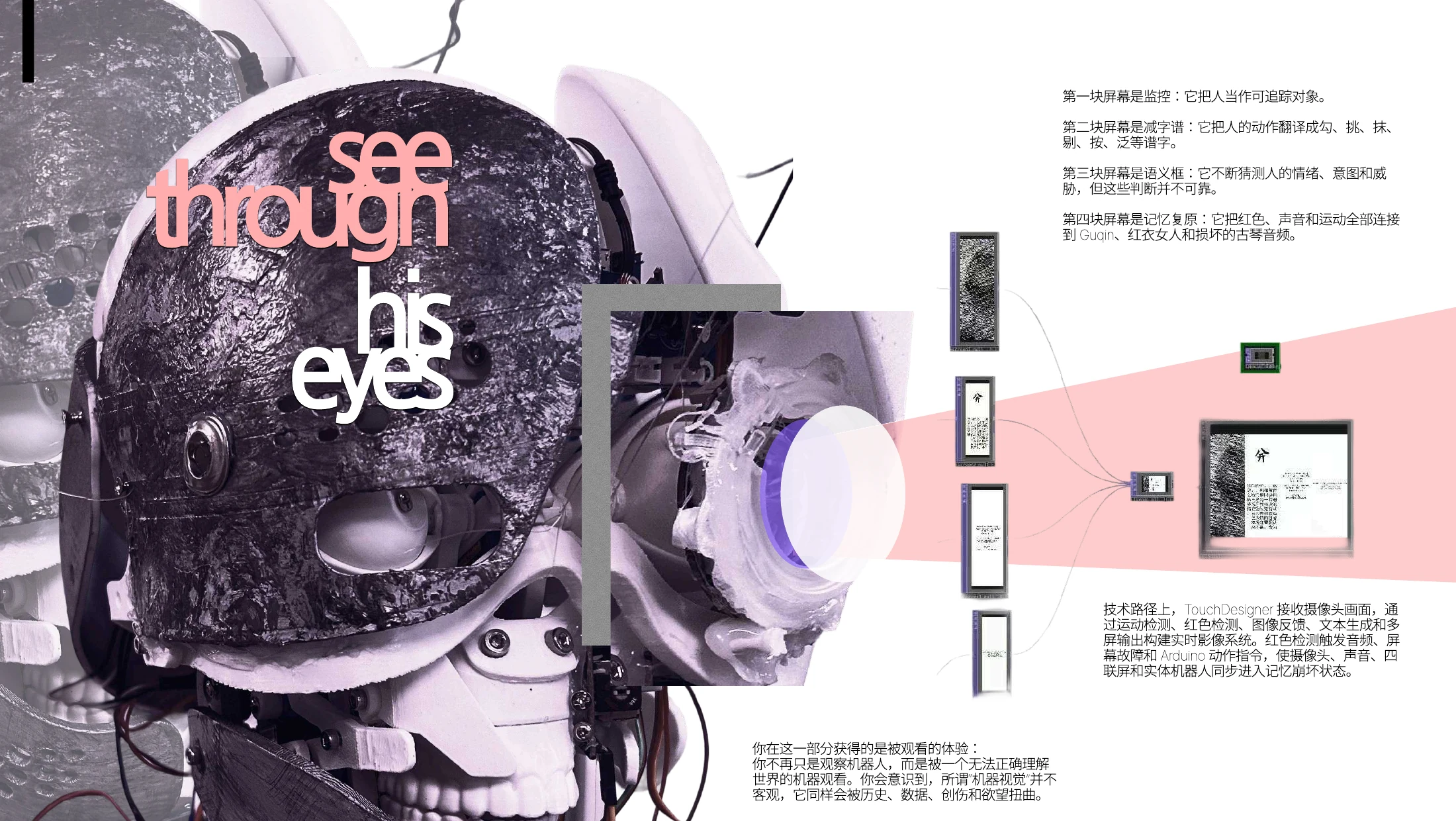
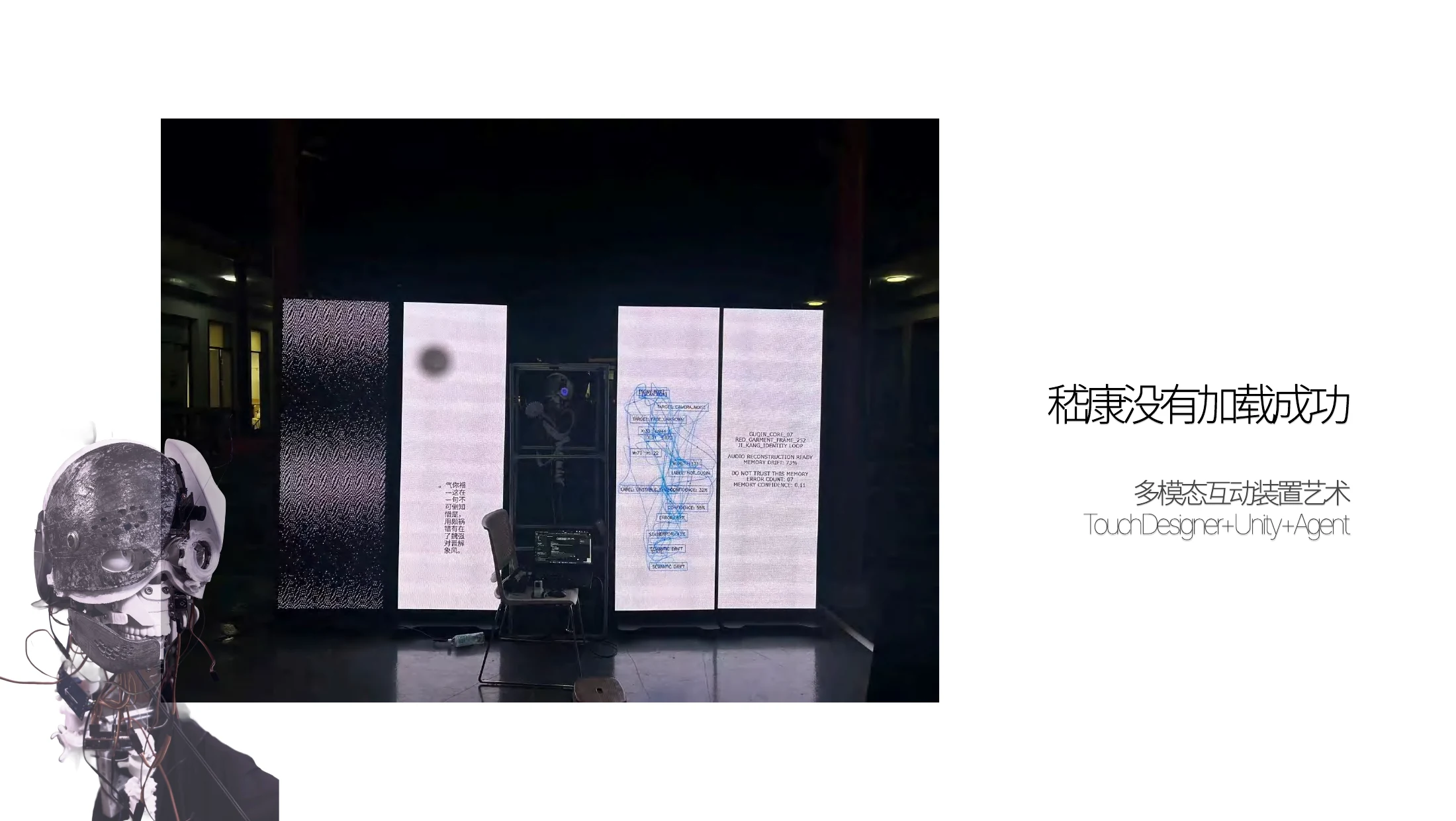
Four screens perform surveillance, notation translation, semantic guessing, and memory reconstruction, placing the visitor inside the gaze of a machine that cannot correctly understand the world.
TouchDesigner handles camera input, motion and red detection, feedback imagery, and multi-screen output. Unity carries the mindscape while an agent, speech synthesis, and Arduino coordinate dialogue, sound, and physical motion.
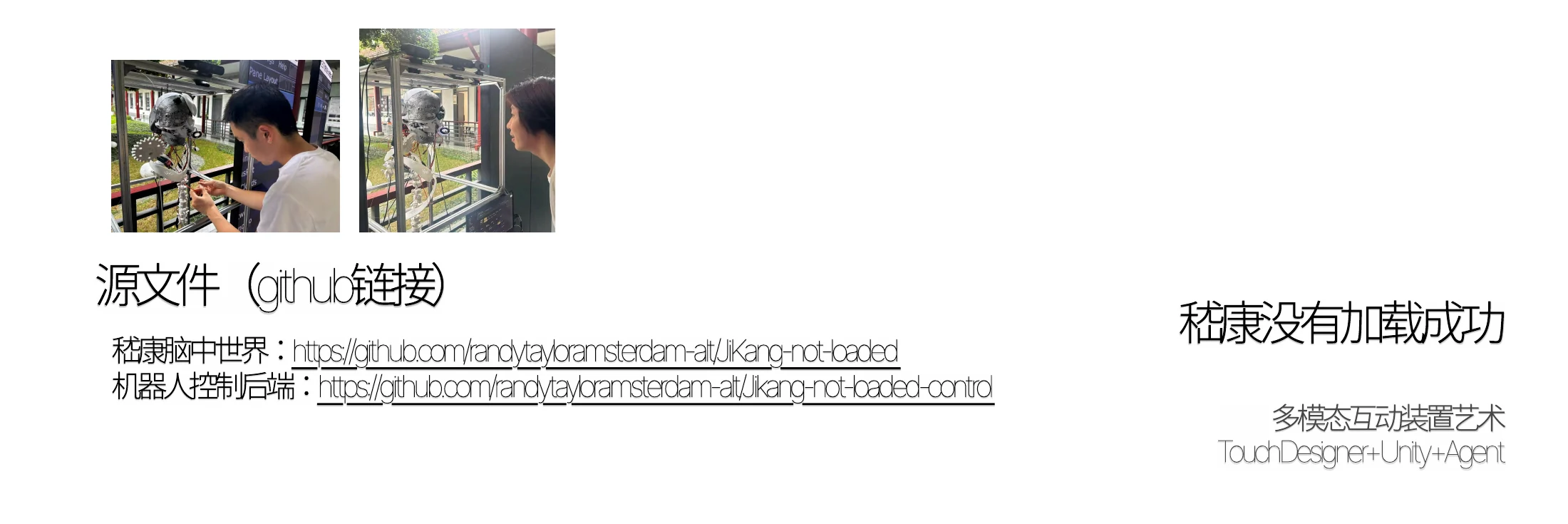
The installation combines a physical robot with projection and four screens. The public robot-control backend documents how the work moves from narrative concept to a running system.
9 original spreads, preserved in their complete proportions.